Our Products
Drapery



Smart Design
for Light Control & Energy Savings
All our drapery is sewn in Windsor by our own seamstress; we work with our huge selection of drapery fabrics from all over the world sourced by Canadian wholesalers.
If you are a hobby seamstress or tailor that sews their own drapery, we offer a much larger selection of drapery and sheer fabrics than you can buy at big box stores and a full range of drapery rods and poles. We sell drapery hardware and our fabrics to the public and you can order them from us in store. We will call you when it arrives for pick up (delivery time depends on the product).
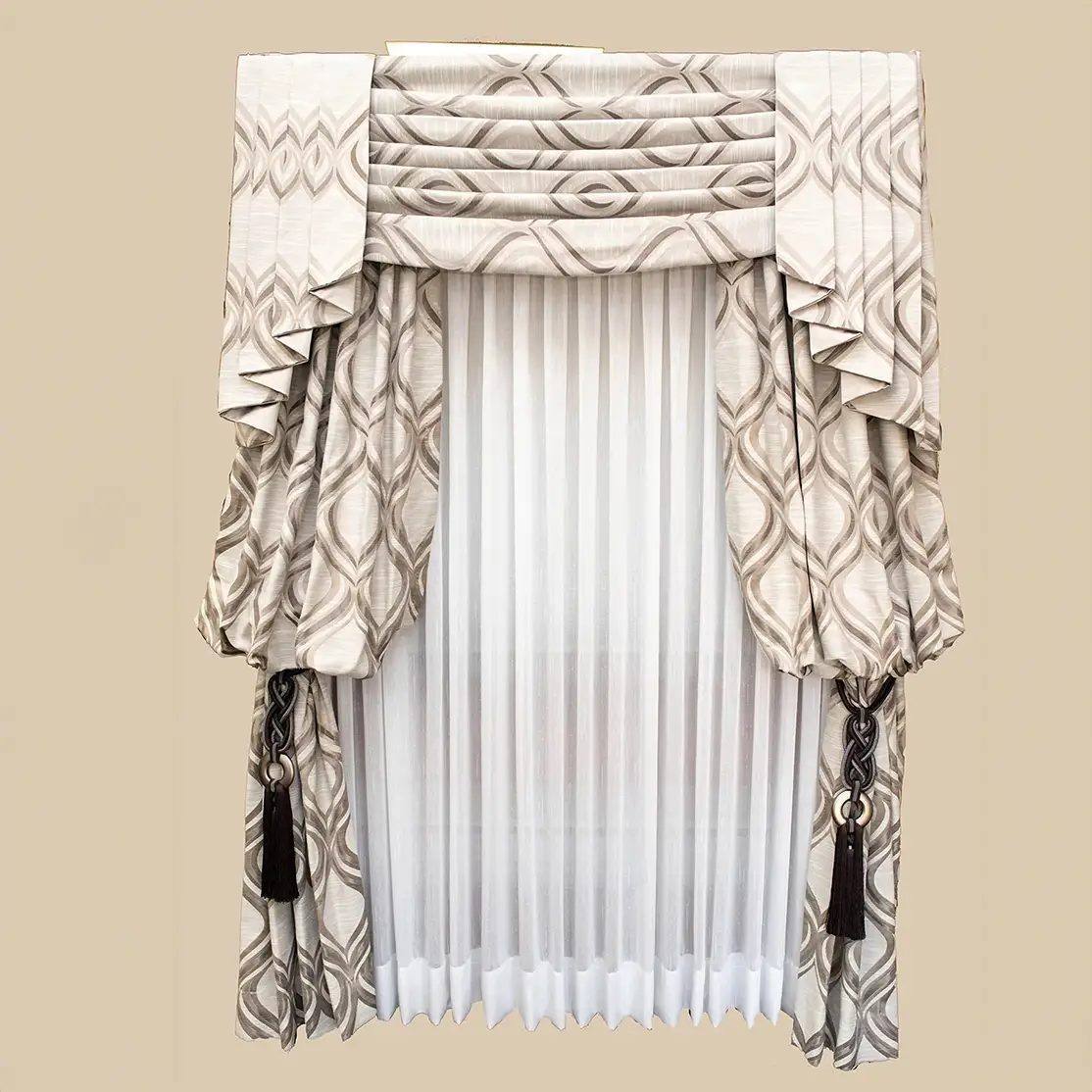
Our drapery is made specifically for your windows; there are many different options that we will discuss with you during your in-home consultation: including the hardware (whether using your existing drapery rods or starting fresh) we will find the best options for you. Depending on your sun exposure, insulation requirements and privacy needs, the drapery can be sewn unlined, or lined with either a light filtering or black out liner.

Most common drapery styles are on display in our showroom including:
Triple Pinch Pleat – The most popular pleat style for drapery and sheers because it offers elegantly shaped drapery for use with all hardware types including poles with rings and channel rod which is the hardware we use most often as well as use with motorized drapery tracks.
Top Pleat – A variation on triple pinch pleat where the pleat is sewn at the top for a less traditional look to the drapery. Top pinch pleat is for use with all hardware types including poles with rings and channel rod which is the hardware we use most often as well as use with motorized drapery tracks.
Rod Pocket Top – A style where the drapery is gathered on a pole through a sewn pocket at the top. Because it gathers on a drapery pole and doesn’t use hooks, it cannot be used with rings or channel rod. This style of drapery hard to slide along the pole, so it is most commonly used for stationary side panels.
Tab Top – A style where the drapery is gathered on a pole through sewn tabs of fabric at the top of the drapery. Because it gathers on a drapery pole and doesn’t use hooks it cannot be used with rings or channel rod. This style of drapery hard to slide along the pole, so it is most commonly used for stationary side panels.
Back Tab – A style where the drapery is gathered on a pole through sewn tabs of fabric which are hidden at the back of the top edge of the drapery. Because it gathers on a drapery pole and doesn’t use hooks it cannot be used with rings or channel rod. This style of drapery is hard to slide along the pole, so it is most commonly used for stationary side panels.
Inverted Box Pleat – A style where the pleats at the top are almost flat giving it a very different look for those looking for a non-traditional drapery style. It works with all hardware types including poles with rings and channel rod which is the hardware we use most often as well as use with motorized drapery tracks.
Grommet top – A style of drapery where instead of pleats the drapery uses large round grommets to maintain its shape and slide along a pole. We use brass grommets which are made in the UK and are colour matched with our drapery poles. This style is good for medium and small windows. It is not recommended for really large windows and patios doors due to the required spacing of brackets for the style of drapery pole it uses.
Rolled Pleat – A popular style where the pleats at the top are sewn in a rounded shape giving it a very different look for those looking for a non-traditional drapery style. It works with all hardware types including poles with rings and channel rod which is the hardware we use most often as well as use with motorized drapery tracks.
Goblet Pleat – A style where the pleats at the top are sewn in a rounded shape and pinched at the bottom of the pleat giving it a goblet of ‘Christmas cracker’ shaped look for those looking for a non-traditional drapery style. It works with all hardware types including poles with rings and channel rod which is the hardware we use most often as well as use with motorized drapery tracks.
Ripplefold – A style of drapery where instead of pleats the drapery uses “snap tape” attached to the back edge of the drapery which when attached to the specialized carriers on channel rod produce clean looking curves which hang just below the decorative rod. This non-traditional drapery style only works on channel rod or for use with special carriers on motorized drapery tracks.
Drapery Product Line
Click On An Image to View
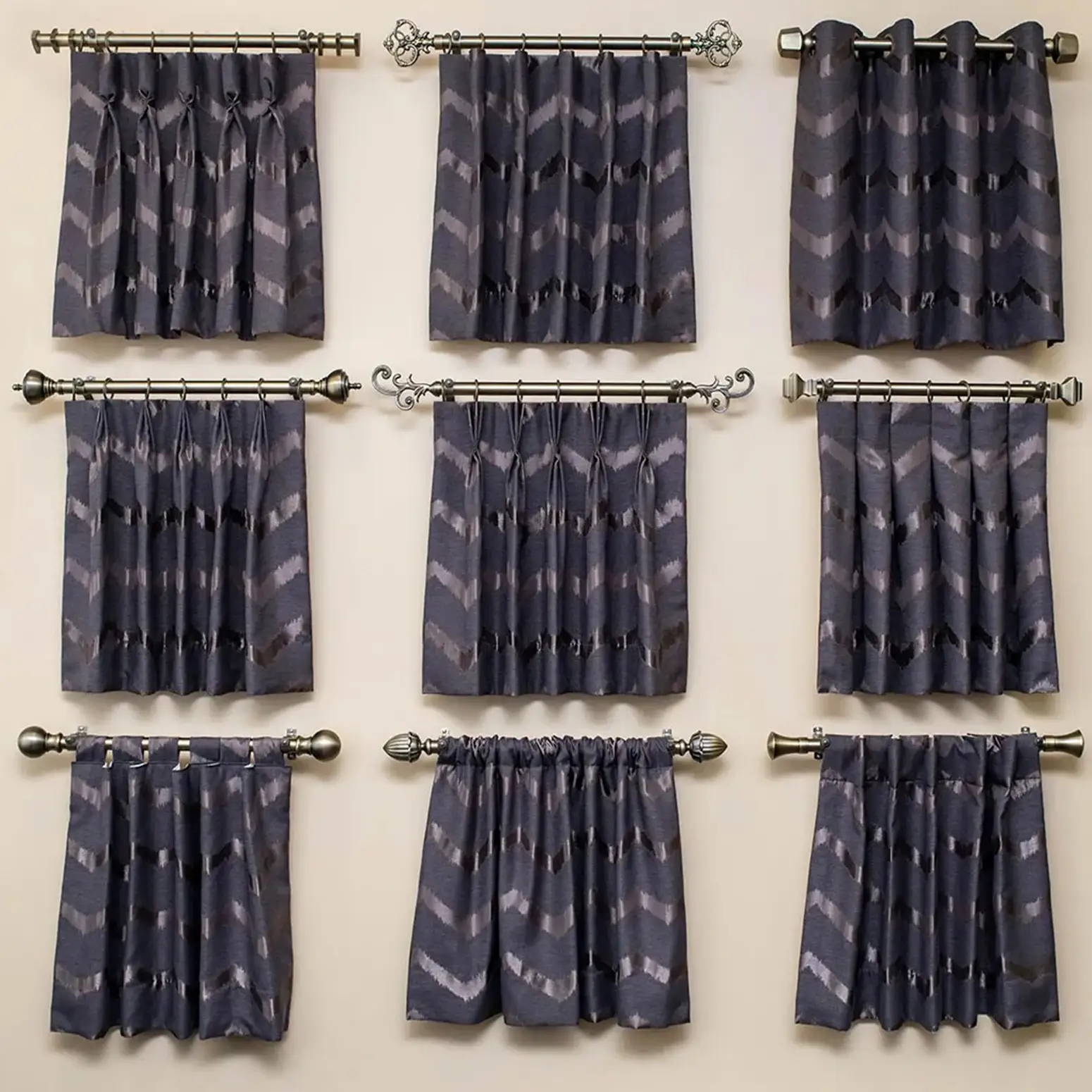
Drapery Styles

Pinch Pleat
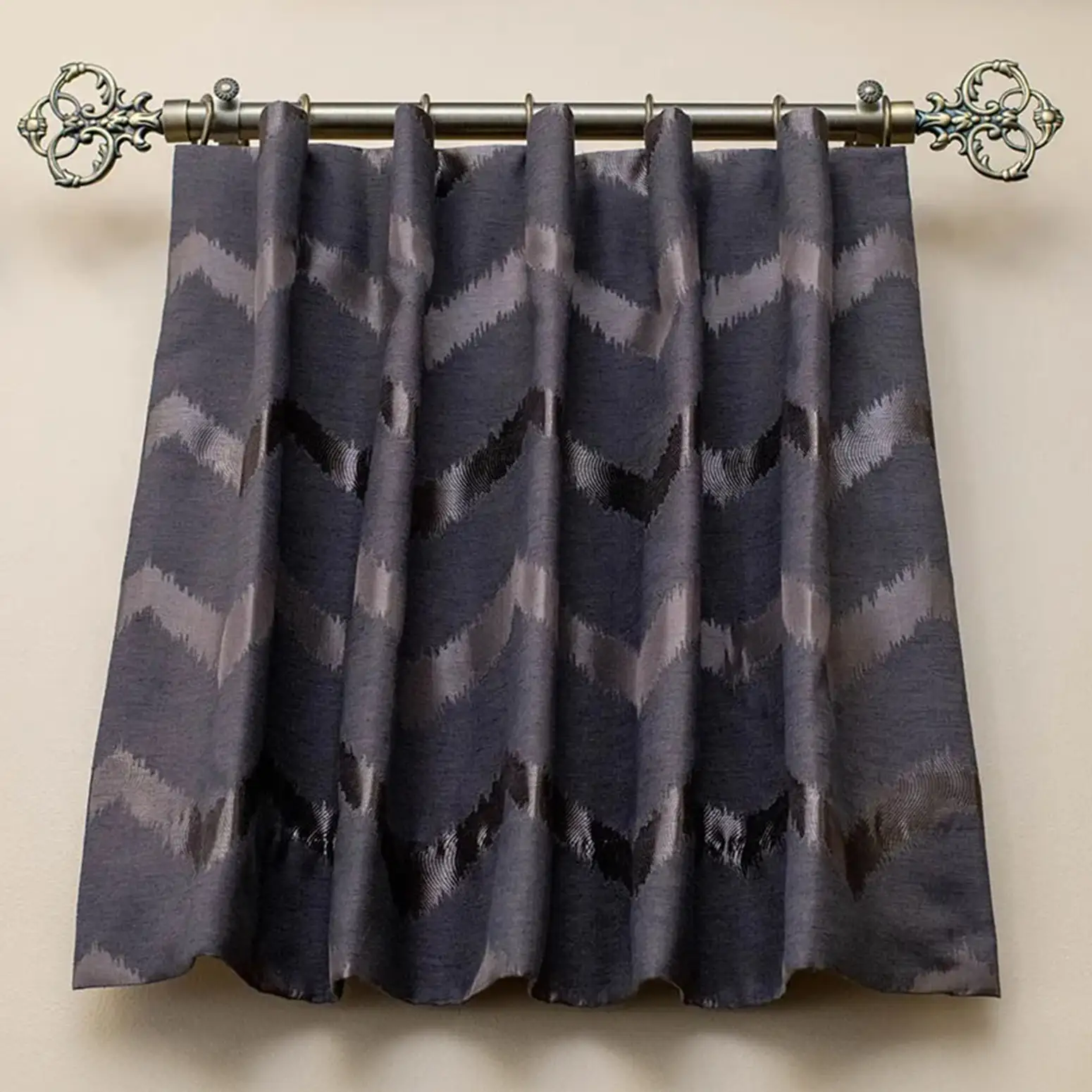
Rolled Pleat
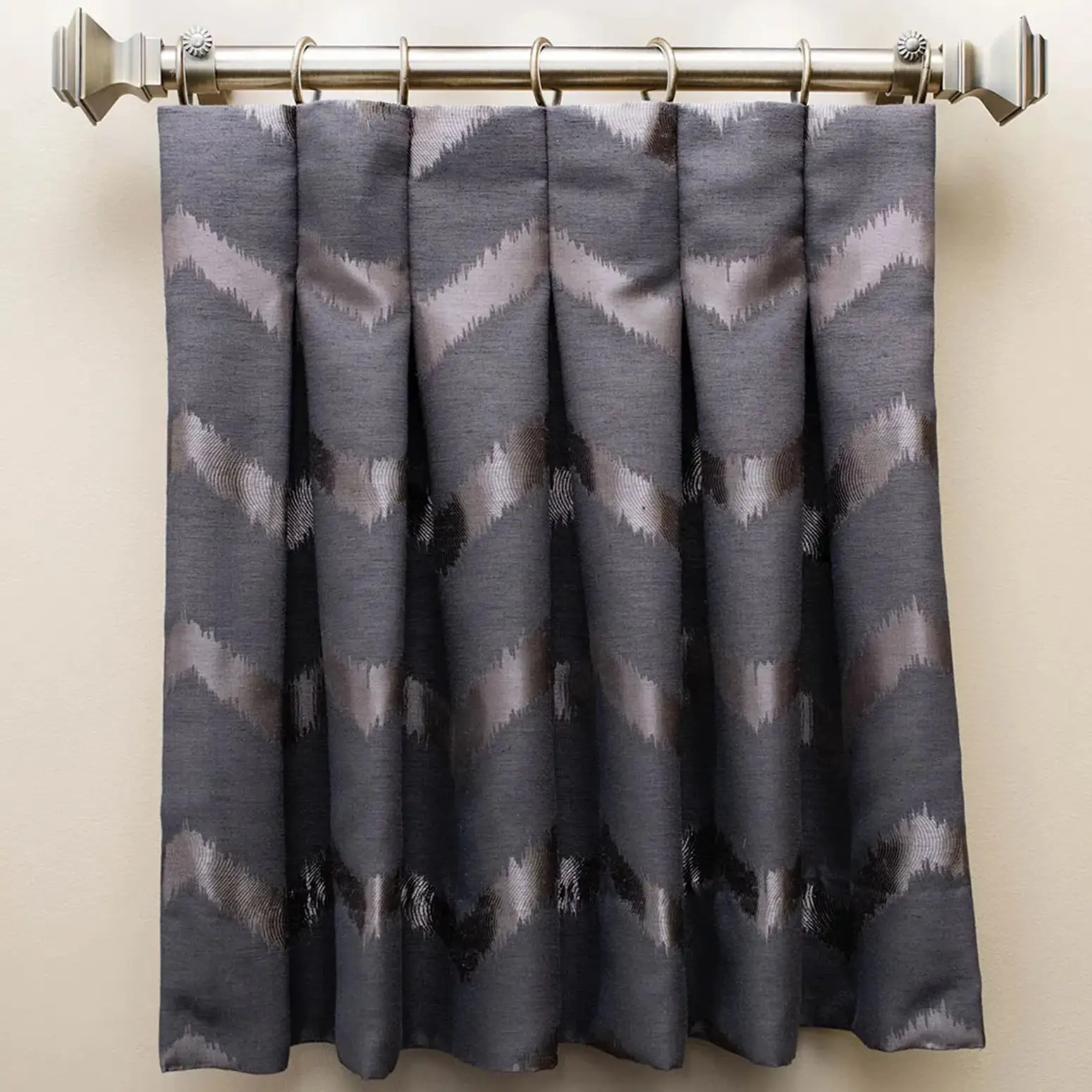
Inverted Box Pleat

Grommet Top
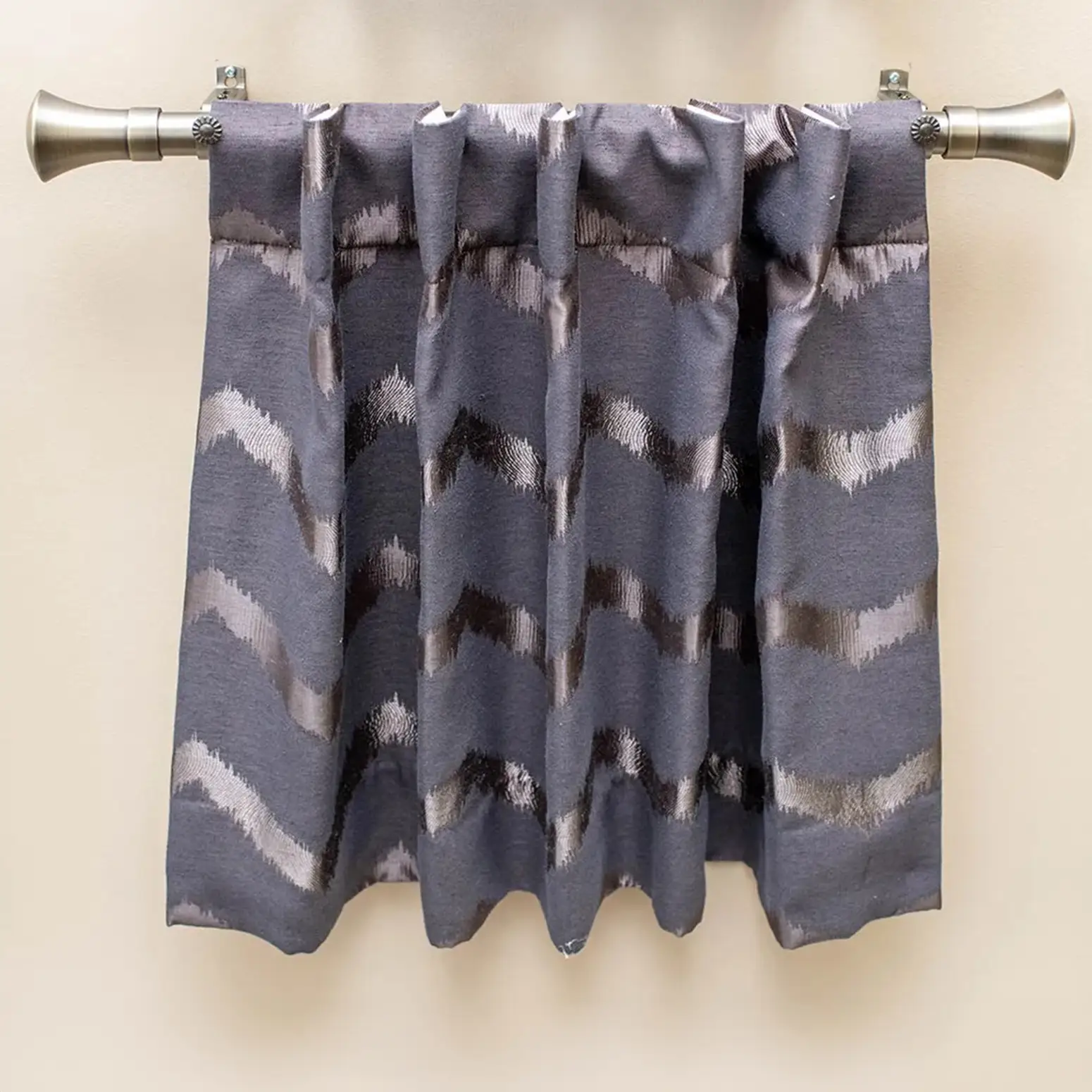
Back Tab
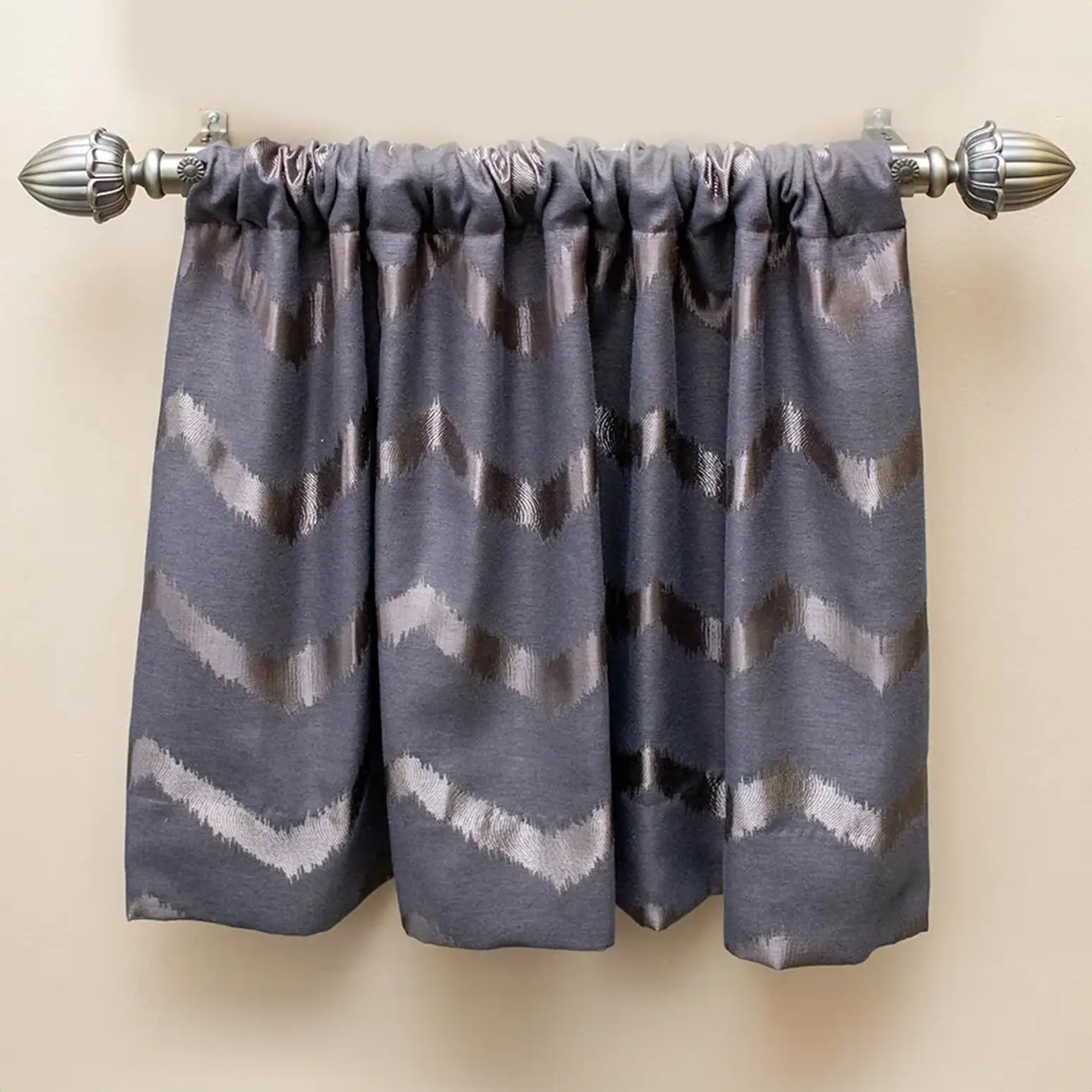
Gathered Top
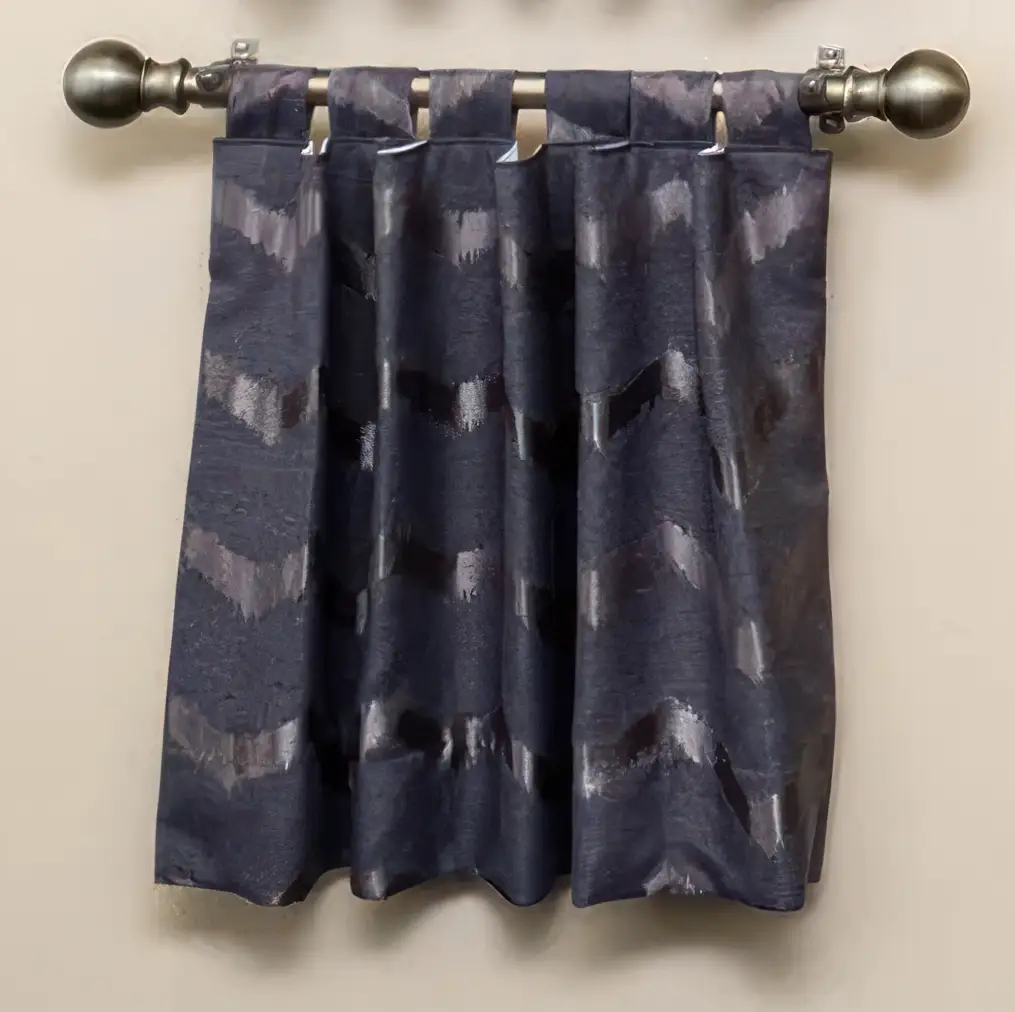
Tab Top

Goblet Pleat
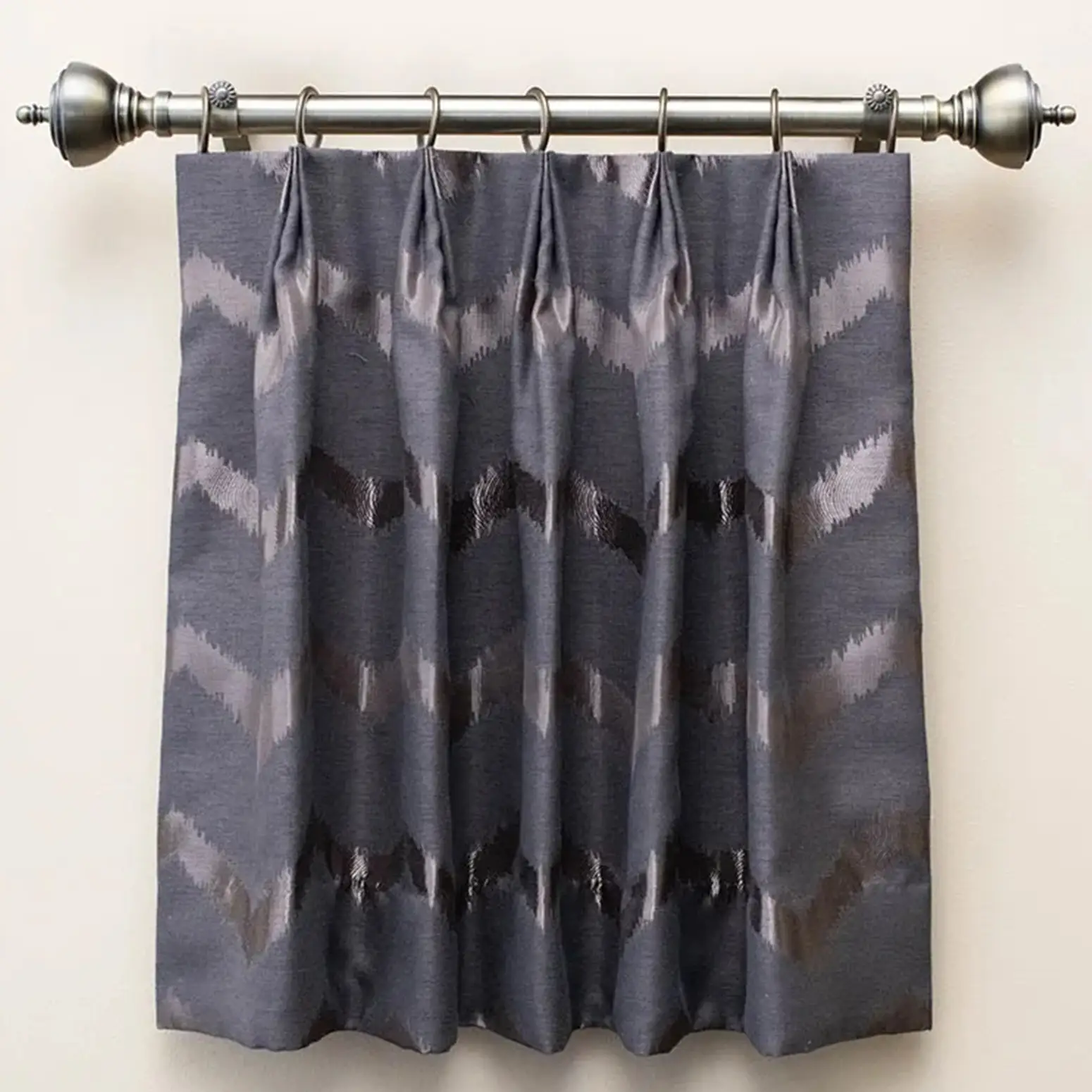
Top Pleat
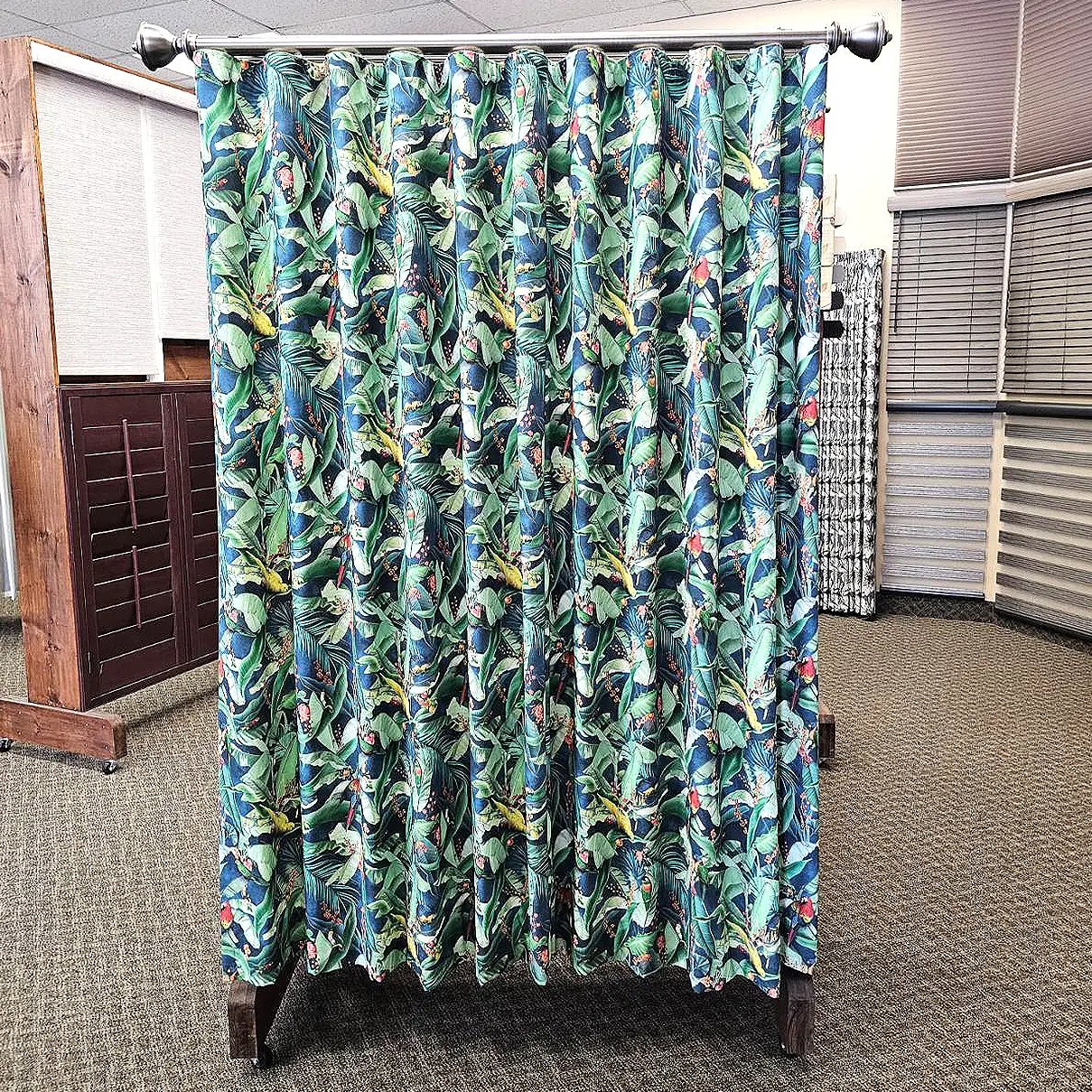
Ripplefold drapery closed
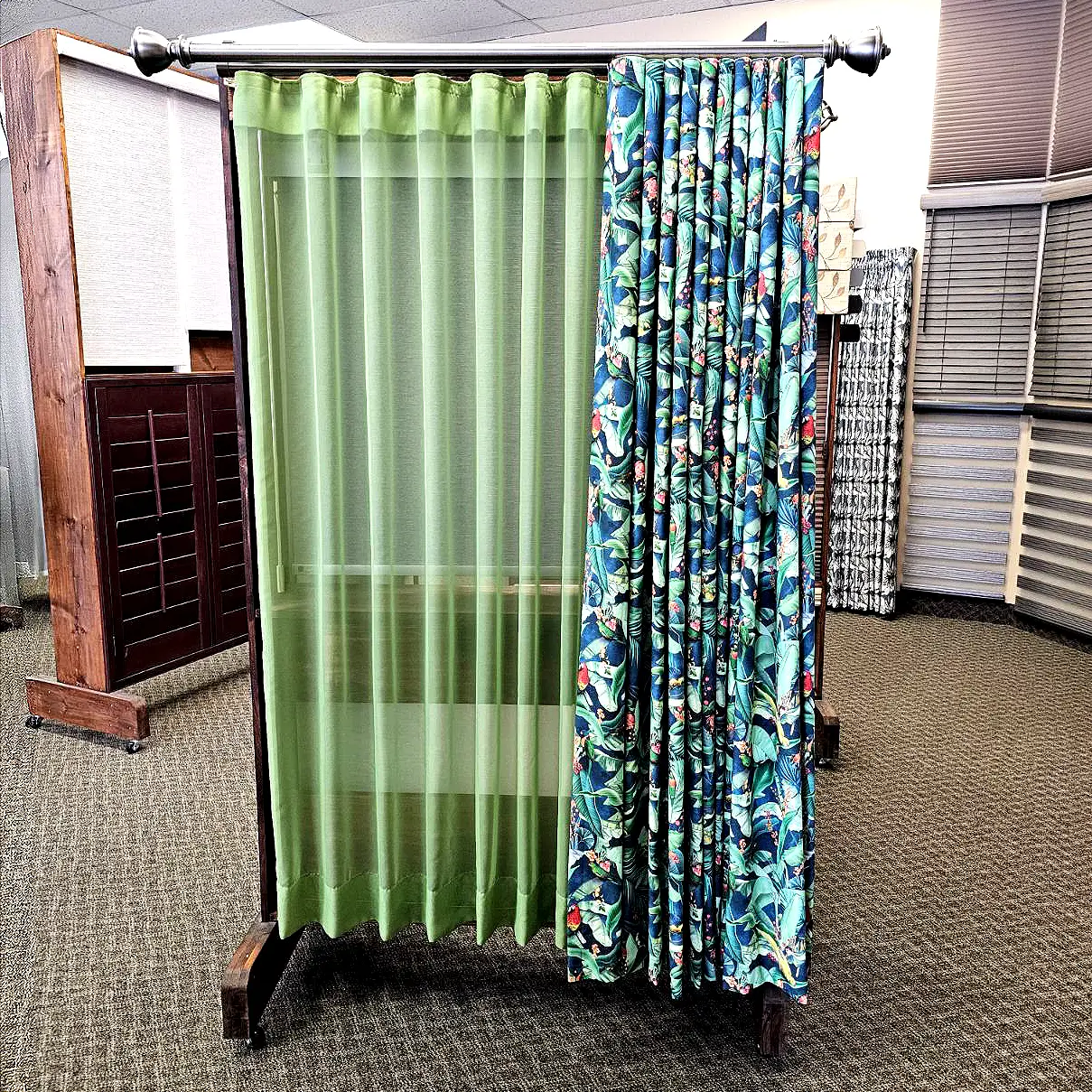
Ripplefold drapery open (with sheers)

Ripple Fold Drapery

Pinch pleated drapery open
(with sheers)
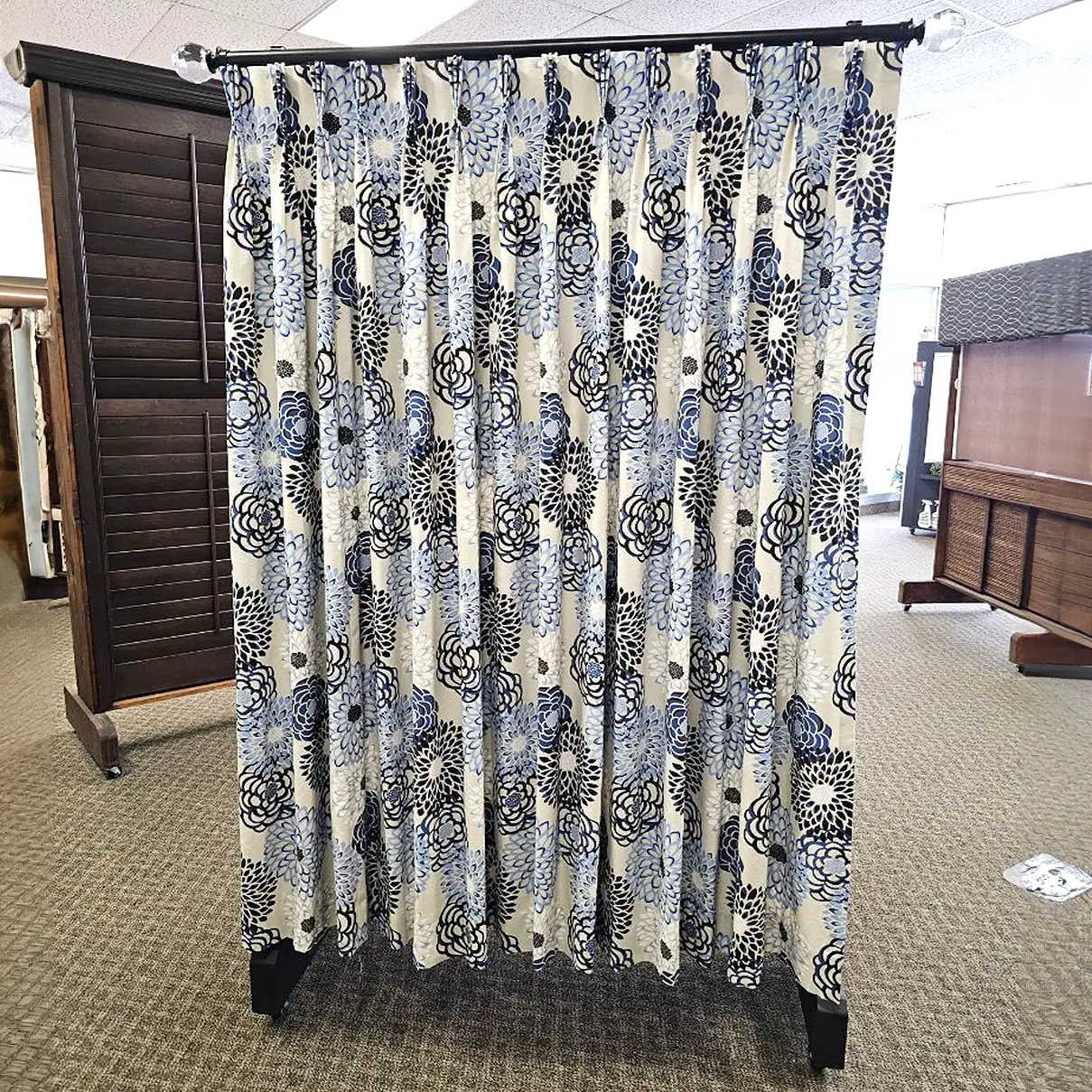
Pinch pleated drapery closed

Ripple Fold Drapery with Sheers on a Double Rod

Drapery Arch on Decorative Holders

Motorized Pinch Pleated Drapery – Closed

Motorized Pinch Pleated Drapery – Open
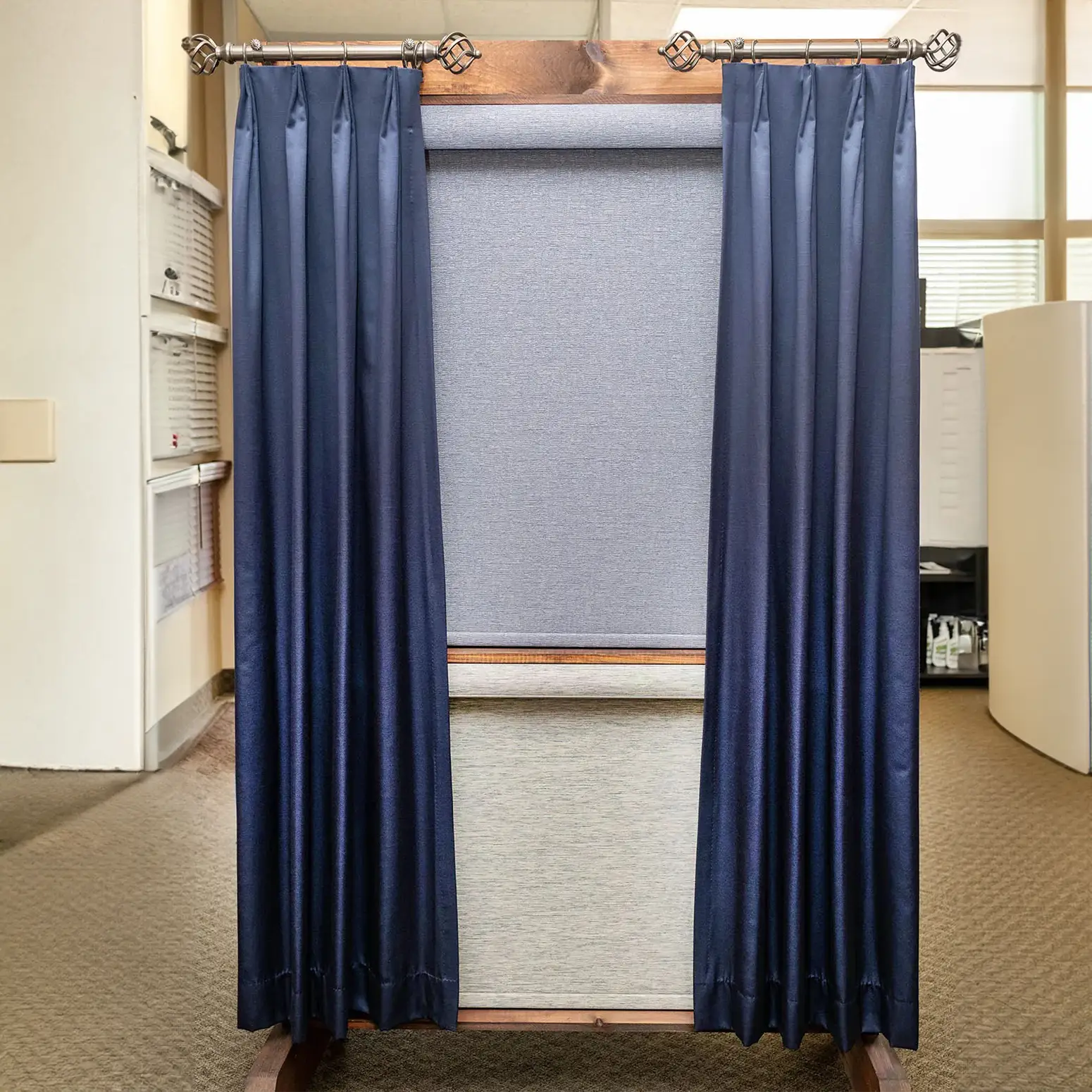
Top Pleat Drapery with Side Panels

Pinch Pleated Drapery on Double Channel Rod – Closed
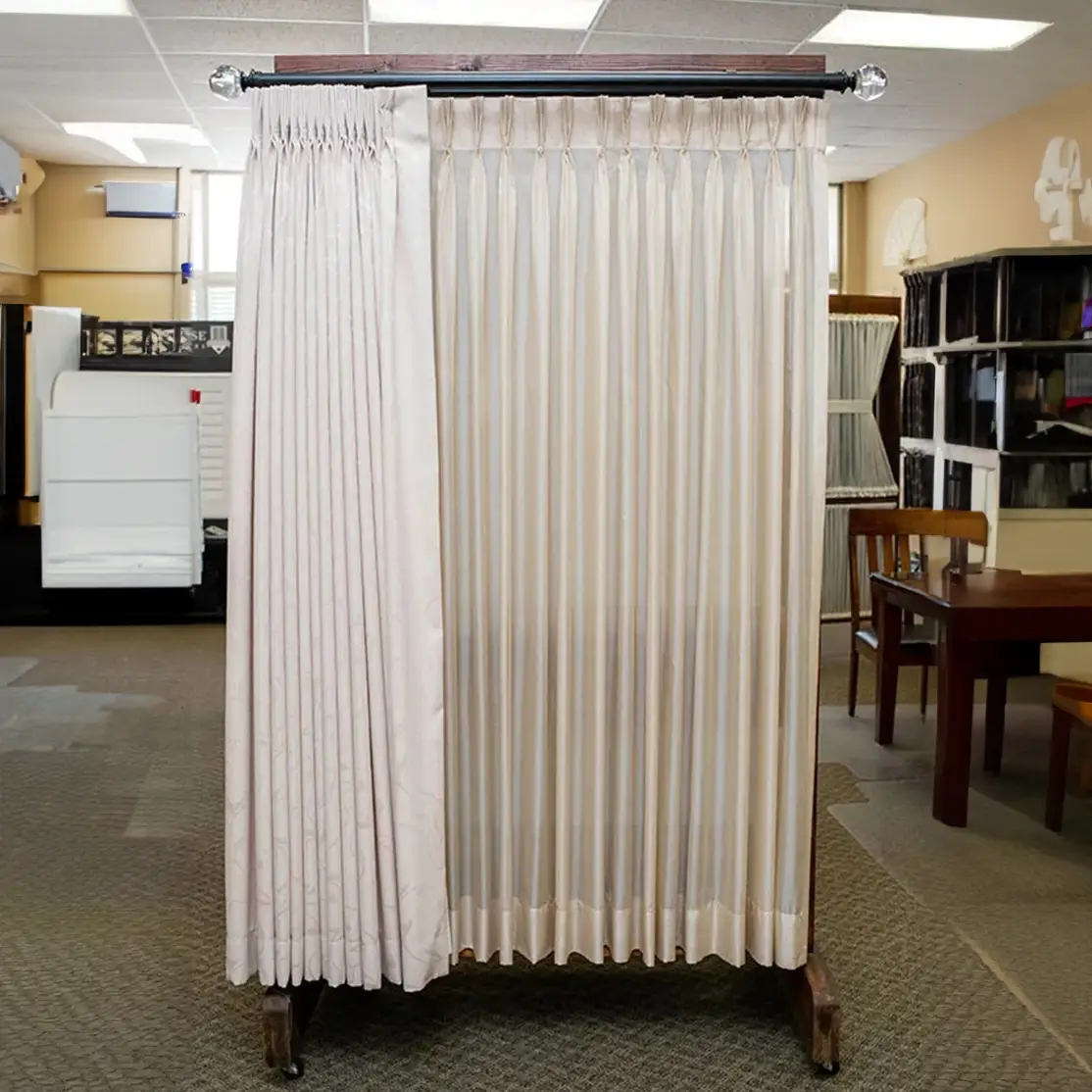
Pinch Pleated Drapery Open to Show Pinch Pleated Sheers on Double Channel Rod
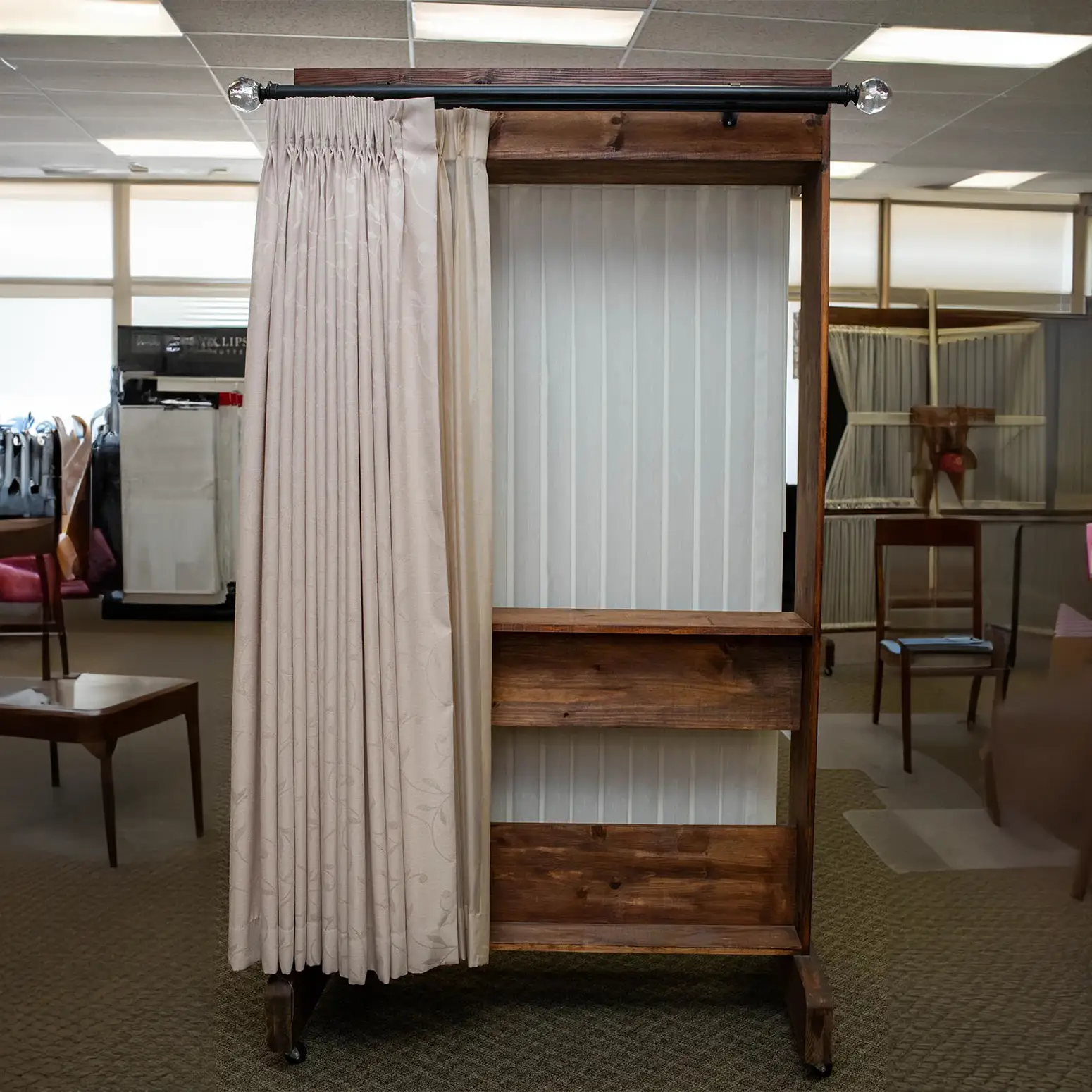
Pinch Pleated Drapery on Double Channel Rod – Fully Open